
 Read
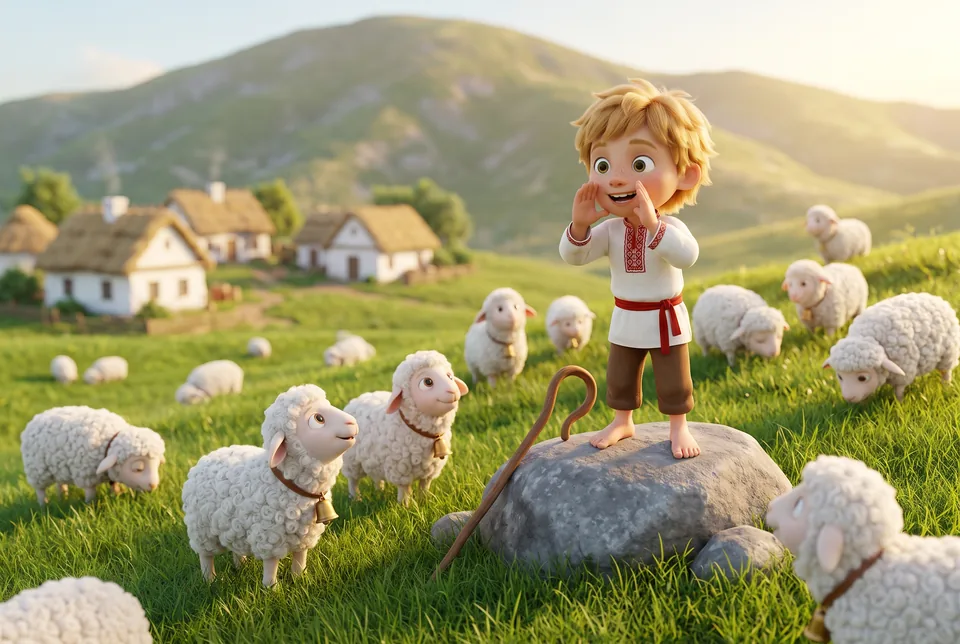
The Boy Who Cried Wolf
Twice a shepherd boy calls the villagers to save his sheep from a wolf just for a joke, and when the wolf really comes, nobody believes him.

Aesop was an ancient Greek fabulist credited with hundreds of short animal fables, such as “The Lion and the Mouse” and “The Ants and the Grasshopper”.
According to tradition, Aesop lived in the 6th century BC and was a slave on the island of Samos; the historian Herodotus mentions him too. Whether Aesop really existed is not known for certain. His fables were passed on by word of mouth for a long time, and people only began to collect them after his day.
An Aesop fable is short: a few characters, one event and a lesson that is easy to remember. That is why they have been retold to children in many languages for centuries, and the phrase “Aesopian language” still means speaking in hints.
We have three of Aesop’s fables, retold for the youngest: “The Lion and the Mouse”, “The Ants and the Grasshopper” and “The Boy Who Cried Wolf”.
ReadTwice a shepherd boy calls the villagers to save his sheep from a wolf just for a joke, and when the wolf really comes, nobody believes him.
 Read
All summer the ants carry grain, while the Grasshopper just plays his little fiddle. Then winter comes, and the hungry Grasshopper knocks at the anthill.
ReadA Lion laughs at a tiny Mouse and lets her go, but later she chews through the ropes of a net and saves him.