The Little Fir Tree
A little fir tree is in such a hurry to grow up and wait for something better that she misses her own happiness until it is gone.
- Sad
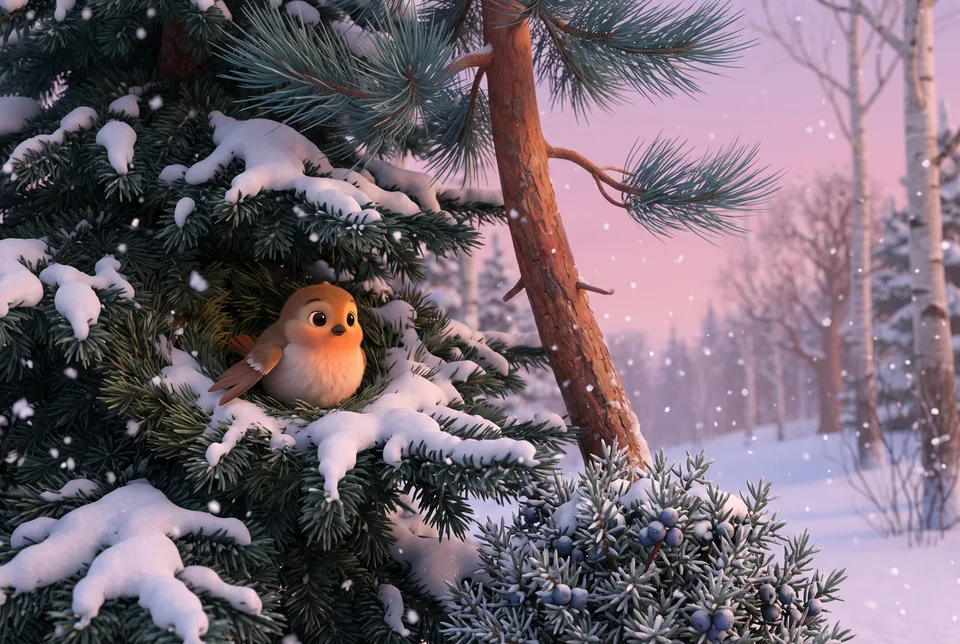
Far away in the forest, in a sunny glade, a little Fir Tree was growing. The sun warmed her, the breeze rocked her, and all around stood tall firs and pines, her older friends. You would think she had everything to be glad about. But nothing was ever right for the Fir Tree.
“Oh, if only I could grow up faster!” she sighed. “To be tall, tall, tall, like them!”
In summer, village children came to the forest for strawberries. They sat down beside the Fir Tree with their baskets full and said:
“Oh, what a little fir tree! How pretty she is!”
And the Fir Tree only bristled her needles. She did not want to be little, and she did not want to be pretty. She wanted to be big.
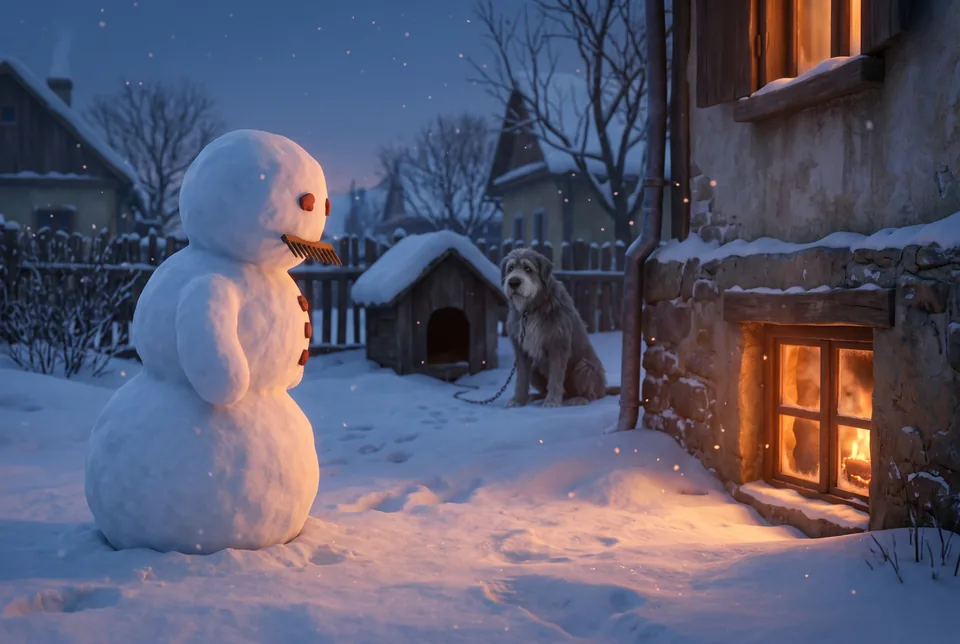
In winter, when snow covered the glade, a hare would come running. Hop! — and over the Fir Tree he sprang, as if she were a mere molehill! Oh, how that stung! One winter passed, then another, and by the third the Fir Tree had grown so tall that the hare had to run around her.
“Grow, grow, become big and old — what could be better in the whole world!” thought the Fir Tree.
Every autumn, woodcutters came to the forest. Chop, chop! rang their axes, and the tallest trees crashed to the ground. Their branches were trimmed off, and they were laid on carts and carried away somewhere.
“Where to?” the Fir Tree worried. “What will become of them?”
In spring a stork flew by, and the Fir Tree asked him. The stork thought for a moment and nodded his long beak.
“I think I know. When I was flying here from Egypt, I saw new ships out at sea. They had tall masts that smelled of fir. They stood so proud!”
“Oh, if only I could grow up and sail the sea! But what is the sea like?”
“It would take too long to tell,” said the stork with a click of his beak, and flew on.
And the sunbeams stroked the Fir Tree’s branches and whispered:
“Rejoice in your youth! Rejoice that you are growing, that you are alive and green!”
The wind kissed her, and the dew washed her every morning. But the Fir Tree did not listen. She was waiting.
Before Christmas, the woodcutters cut down very young trees, some even smaller than the Fir Tree. Their branches were not trimmed. They were laid whole on sleighs and driven out of the forest.
“Where are they going?” wondered the Fir Tree.
“We know! We know!” twittered the sparrows. “We peeked in through the town windows! They stand them in the middle of a warm room and hang them with golden apples, gingerbread, toys, and lots and lots of candles!”
“And then?” the Fir Tree trembled. “What happens then?”
“We saw nothing more. But it was wonderful!”
“Maybe that will happen to me?” thought the Fir Tree. “That is even better than sailing the sea! Oh, if only it were Christmas already! It is so dull standing here.”
“Rejoice in us,” whispered the sunbeams. “Rejoice here, in the open air.”
But the Fir Tree did not rejoice. She grew and grew, green, so green, and people passing by said, “What a fine little tree!”
And the next Christmas the axe struck right beside her. Chop! — the Fir Tree swayed and fell on the snow. And then, for the first time, she felt sad. She would never again see her own glade, her older friends, the little bushes, and maybe not even the birds. This was not at all how she had imagined her happiness.
The Fir Tree was carried to town, to a big house, and set up in a bright hall, in a tub of sand wrapped in green cloth. Maids and young ladies cheerfully set about dressing her up. They hung little nets of sweets on her branches, gilded apples and nuts, and dolls that looked just like living people — the Fir Tree had never seen anything like them. They fastened dozens of small candles, red, white, and blue. And at the very top they set a big star of golden tinsel.
“Oh, if only it were evening!” thought the Fir Tree. “Perhaps someone will come from the forest to look at me? Perhaps the sparrows will peek in at the window?” From impatience her bark even began to ache, and for trees that is the same as a headache for us.
Then the candles were lit, and the doors flew open! The children rushed into the hall, and the grown-ups could hardly keep up. The little ones froze for a moment, and then they shouted and stamped! The children danced in a ring around the Fir Tree until her branches jingled.
One candle tickled a green twig, and the young ladies quickly put it out.
Then the children were allowed to take the treats. Oh, what a merry uproar! Sweets, apples, nuts — everything vanished into small pockets in a flash. “What are they doing?” wondered the Fir Tree. But no one looked at her any more, except the old nurse, who searched among the branches in case a forgotten gingerbread was still hiding there.
“A story! A story!” cried the children, and they pulled a plump little man over to the Fir Tree.
He sat down under it and asked:
“Which would you like: the one about Ivedy-Avedy, or the one about Klumpy-Dumpy, who fell down the stairs and still married a princess?”
“Ivedy-Avedy!” cried some.
“Klumpy-Dumpy!” cried others.
The man told the story of Klumpy-Dumpy. And the Fir Tree stood very still and listened: nobody in the forest had ever told such tales. “Klumpy-Dumpy fell down the stairs and still won a princess!” she thought. “That is probably how things happen in the world. Who knows, maybe I will fall down the stairs and win a princess too!” And she believed it, because the man was so dignified.
“Tomorrow they will dress me up again,” the Fir Tree dreamed at night. “And there will be candles again, and a story again.”
In the morning the maids came. “Well, here it begins!” the Fir Tree thought happily. But they dragged her up the stairs to the attic and stood her in a dark corner where no daylight came.
“What can this mean?” wondered the Fir Tree. “What am I to do here?”
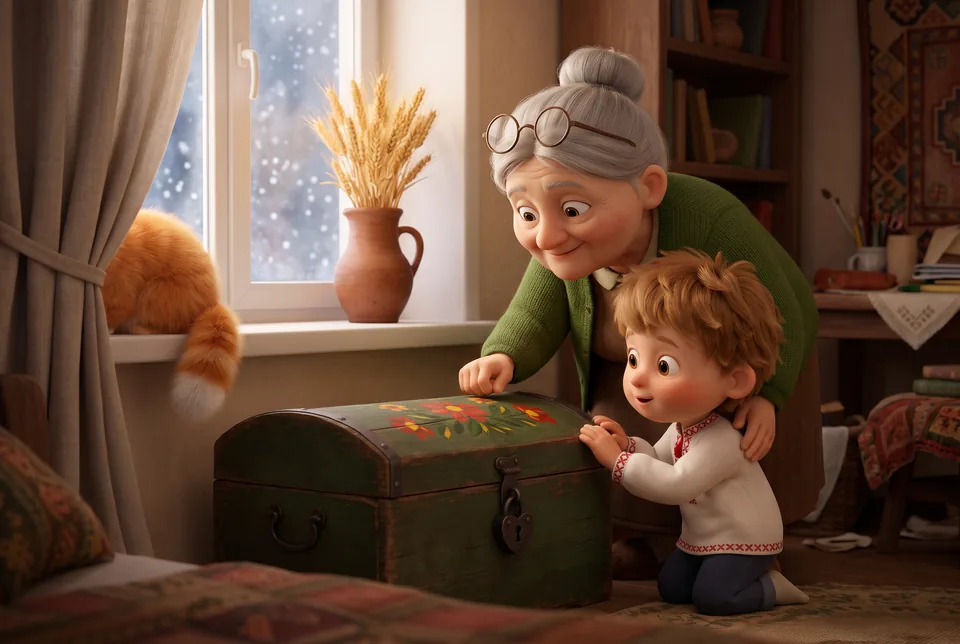
Days and nights passed. Nobody came, or if anyone did, it was only to put some trunk in the corner. It seemed they had forgotten the Fir Tree.
“It must be winter outside,” she reasoned. “The ground is hard and snowy, and they cannot plant me. So they have left me here until spring. How thoughtful people are! Only it is so dark and lonely here. There is not even a little hare… How lovely it was in the forest, when the snow lay and the hare jumped over me! I did not like it then…”
“Peep-peep!” something squeaked, and a little mouse looked out from under a board. And then another.
They sniffed at the Fir Tree and slipped in between her branches.
“It is terribly cold!” said the little mice. “But it is nice beside you, isn’t it, old Fir Tree?”
“I am not old at all!” she said, offended. “There are many trees much older than I am.”
“Where do you come from? What do you know?” the little mice kept asking. They were dying to listen.
And the Fir Tree told them about the forest: about the sun, about the birds, about the hare. The little mice listened, holding their breath.
“How much you have seen! How happy you were!”
“Happy?” asked the Fir Tree, and she grew thoughtful. “Yes, it is true… Those were lovely times.”
Then she told them about Christmas Eve, about the treats and the candles, about Klumpy-Dumpy. The next night four little mice came, and then even more. And each time the Fir Tree remembered something new, and she herself was amazed: how had she not noticed it before?
One day two rats came too. They heard the story of Klumpy-Dumpy and yawned.
“Don’t you know a story about bacon? Or about tallow candles? About the pantry?”
“No,” said the Fir Tree.
“Well, how dull,” the rats grumbled, and went away.
After that the little mice came less and less often, and in the end they stopped altogether.
“How good it was when they sat around and listened!” sighed the Fir Tree. “Now even that is over. Never mind: when they carry me out of here, I will know how to rejoice.”
In spring, people came to the attic and dragged the Fir Tree out into the yard. Oh, what sunshine there was! Roses were blooming, linden trees smelled sweet, and swallows were chirping.
“Now I will really live!” the Fir Tree said happily, and she spread her branches.
But her branches were yellow and dry. She was thrown into a corner of the yard, among weeds and nettles. And at her top the golden star still glittered.
Children were playing in the yard, the very same ones who had danced in a ring around her on Christmas Eve. The youngest boy ran up and took the star.
“Look what was left on the old fir tree!”
The Fir Tree looked at the flowers in the garden, then at her own yellowed branches. And she remembered her glade, and Christmas Eve, and the little mice who had listened so happily to the story of Klumpy-Dumpy.
“It is over, it is all over,” she rustled. “Why did I not rejoice when I could?”
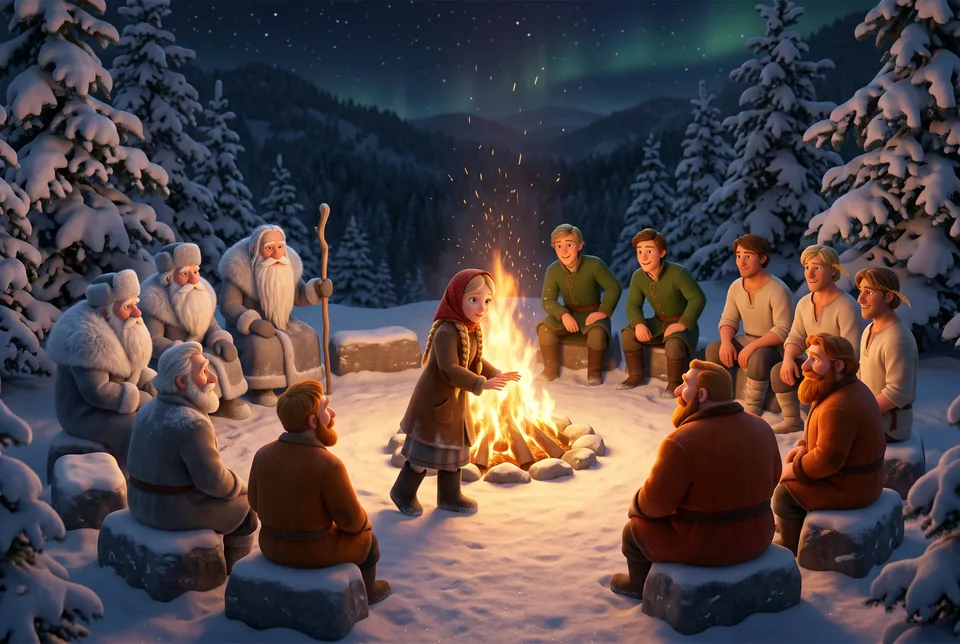
A farmhand came, chopped the Fir Tree into firewood, and put it under a big kettle. The spring morning was still chilly, and the children ran over to warm themselves by the fire. The Fir Tree burned brightly and warmly and, one last time, warmed their hands. She crackled: crack! crack! And with every crack she remembered: a summer day in the forest, winter nights when the stars shone above the glade, Christmas Eve and Klumpy-Dumpy — the only story she had ever heard and could tell.
And on the youngest boy’s chest shone a golden star, the very one the Fir Tree had worn on the happiest evening of her life. The boy watched the fire, and the star twinkled along with the flames. He was not waiting for anything. He felt good just right now.