Timko Moves House
Timko’s family moves to a new house in Ash Tree Glade: there are goodbyes to say to Rusty, Pip and the old house, and a new friend to find.
The “Timko” series · story 6 of 9
- A bit sad
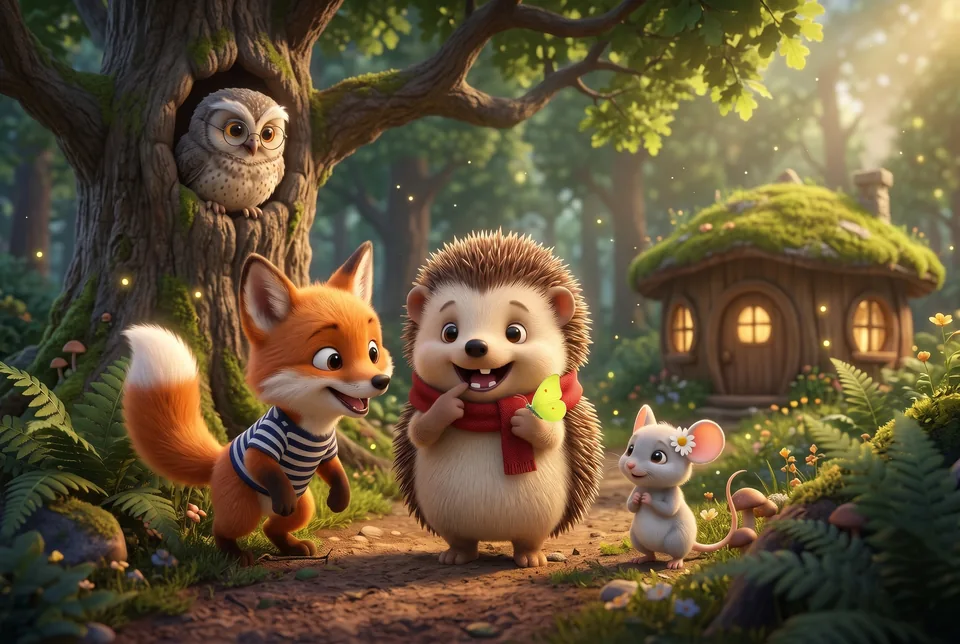
Timko’s little house in Oak Grove was round as a bun, with moss on the roof. Once it had been just right for three. Then Lily came along, grew bigger, learned to run, and the house got as snug as a nutshell. Wherever you stepped, there was Lily’s ball, Lily’s spoon, or Lily herself.
So Dad spent the whole summer walking to the far side of the forest and building a new house: a bigger one, with a green door and a porch, in Ash Tree Glade by Ringing Brook. And today the family was moving.
Mom had been baking since morning. One pie, then a second, then a third…
“Mom, why so many?” Timko asked in surprise.
“I’ll bake a pie, just in case,” Mom smiled, and she put a fourth one in the oven.
Timko only snorted. What case? Everything in the house was already tied up in bundles and baskets. The empty kitchen hummed like a hollow tree: say “oh” and the walls answer “oh.”
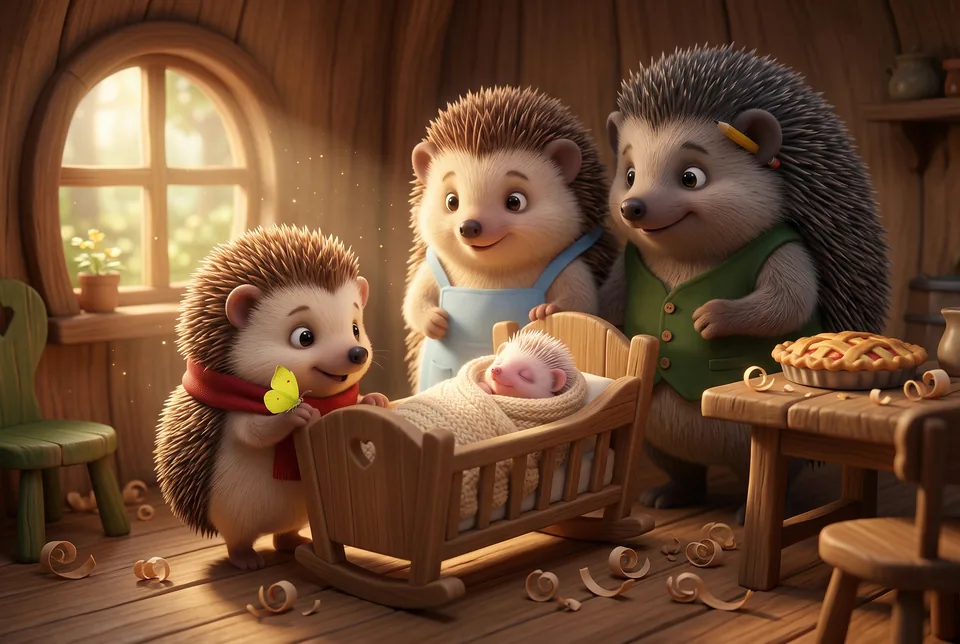
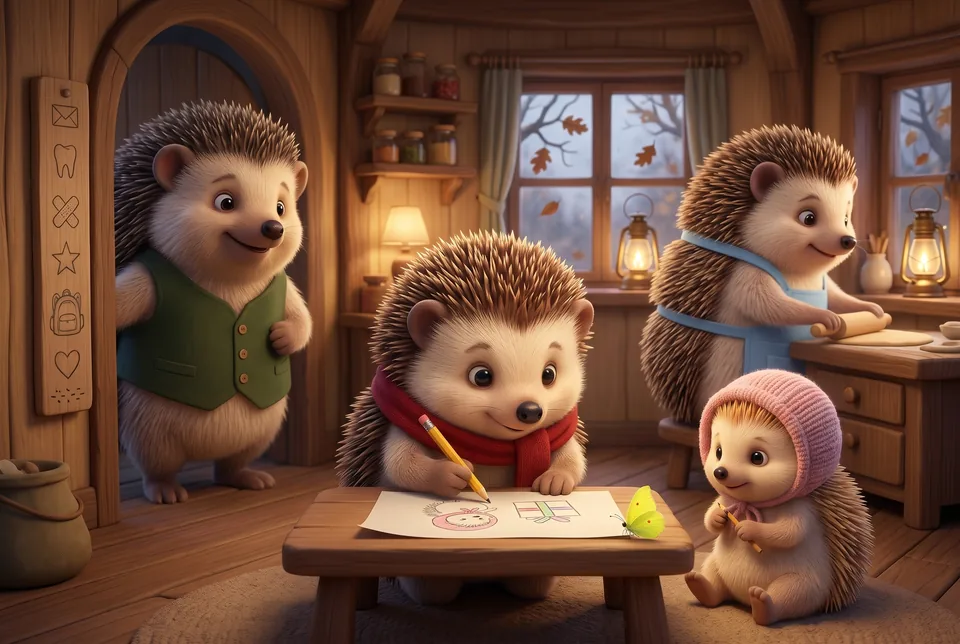
Dad stood by the kitchen door and looked at the door frame for a long time. A little plank was nailed there, and on it were pencil marks: Timko’s height. Next to each mark Dad had drawn a tiny picture: a heart, a backpack, a star, a plaster cross, a tooth. Below ran a second row, Lily’s, just little dots, because Lily was still small.
“Are we leaving it here?” Timko asked quietly. He felt so sad that his nose began to tingle.
Dad said nothing. He took his pincers, creak, creak, and carefully pulled out the nails. The plank settled into his paws.
“We’re taking it with us,” said Dad. “How else would we know how much you’ve grown?”
Timko leaned against Dad. And Lily came running and leaned against him too, because she did everything the way Timko did.
Outside, Dad’s cart was waiting, piled with bundles. And beside the cart stood Rusty and Pip.
“I came to say goodbye first!” shouted Rusty. “Me first!”
He rushed to hug Timko, so tightly that he almost knocked him off his paws. Pip came up quietly. She was the same Pip Timko had once walked home to her burrow with a lantern. She stood on tiptoe and straightened the red scarf on Timko.
“Are you scared?” Timko asked her. “Without me, I mean.”
“Just a teeny bit,” said Pip. Then she thought it over and added honestly, “But sad? Very.”
The three of them stood there without a word. Only yesterday everything had been simple: kindergarten in the morning, hide-and-seek under the oak after lunch, “see you tomorrow!” in the evening. Now you couldn’t say “see you tomorrow.” Ash Tree Glade was far away, on the other side of the forest. You can’t run all that way every day.
“Come and visit,” Rusty muttered, and sniffled. “No, better still, I’ll come to you. I’ll come first, all right?”
“All right,” said Timko, and his voice came out very thin.
Mom handed out the pies: to Rusty’s mom, to Pip’s granny, to the hedgehog neighbors, and even to the old badger, who came out to see what all the noise was about. And one pie, wrapped in a towel, she set on the very top of the cart.
“Who is that one for?” asked Timko.
“Just in case,” Mom said again.
Then, whoosh, Granny Owl swooped down from the oak and landed on the edge of the cart.
“Granny, what about you?” Timko’s whiskers trembled. “You’re staying here…”
“Hoo! Here’s a riddle for you,” said Owl, and she straightened her glasses. “For paws, a whole day’s road. For wings, three flaps. What is it?”
Timko thought and thought, and could not guess.
“Never mind,” Owl winked. “You’ll tell me in the evening.”
“But how can I tell you if you’re here and I’m there?”
“Then think about that,” hooted Granny Owl.
Creak, creak, the cart rolled off. Dad pulled, Mom carried the basket, Lily rode on top between the bundles, and Timko walked behind and kept looking back. The little round house grew smaller, then smaller still, and then it vanished behind the oaks. Timko knew they would never go back there. The house stayed standing all alone, empty and quiet, and his chest felt heavy, as if he had swallowed a pebble.
The road wound on for a long time, through hazel bushes, through ferns, through sunny little clearings. And then there were ash trees, slim and light, and among them a new house. Big, smelling of fresh wood shavings, with a green door and a porch.
“This is your window,” Dad pointed. “Your room.”
His very own room! Only yesterday Timko had dreamed about it. Now he stood by the doorstep and could not take a single step. The house was lovely, but it was not his.
Timko stopped, snorted through his little nose and said,
“Breathe in, breathe out, and off we go!”
“Breave in! Breave out! Off go!” squeaked Lily, and she was the first, pitter-patter, to run into the house.
Timko laughed. It helped a little. Only a little.
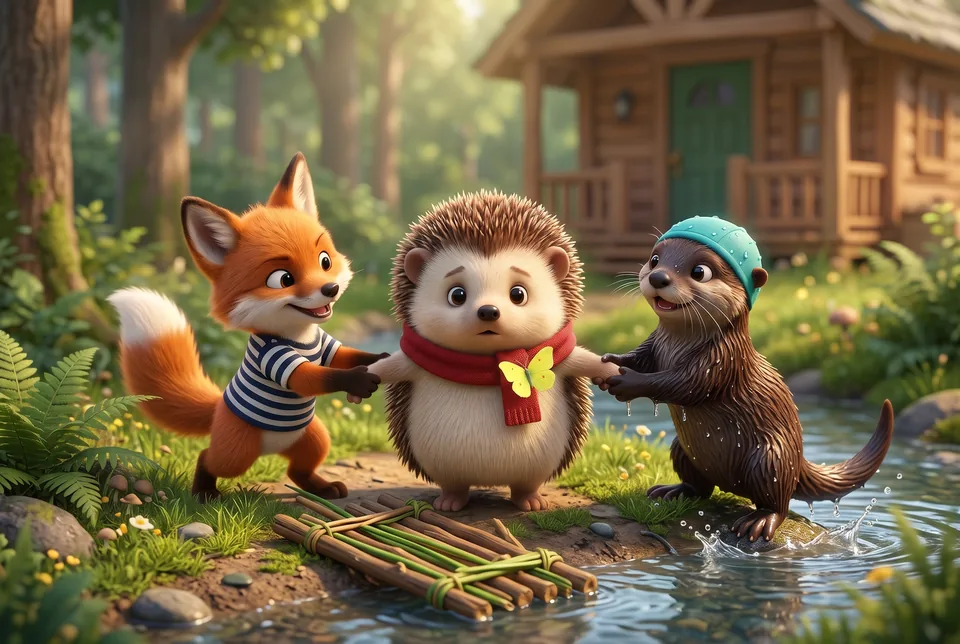
To avoid standing on the doorstep, he went down to the brook. The water rang over the pebbles, ding-a-ling, no wonder it was called Ringing Brook. Suddenly, plop! Out of the water jumped someone wet and sleek in a turquoise swimming cap, tumbled in the air, and, plop, was gone again.
“Splash, done!” called the otter cub, popping up right by the bank. “Who are you?”
“Timko. We’ve just… moved here.”
“I’m Splash! I live here. Can you sail leaf boats? Can you dive? Can you catch a wave with your nose?”
Timko could do none of it. He stood there with nothing to say. At home, with Rusty, words came by themselves, but here they didn’t.
And then he remembered. He ran to the cart and found the pie in the towel at the very top.
“Mom, may I?”
“Didn’t I tell you?” Mom smiled. “Just in case.”
That was how they found out who the extra pie was for. Timko and Splash sat on a warm rock and ate, crumbling crumbs for the fish, and Splash showed how to fold a boat from a leaf. Timko’s first boat tipped over at once.
“Plop, and it’s gone!” Splash roared with laughter. “Never mind, I’ll teach you tomorrow. You will come tomorrow, won’t you?”
“I will,” said Timko. And he was surprised himself how easily it came out.
Toward evening Dad nailed the plank to the new door frame in the kitchen. Tap, tap, and it was in place, as if it had always hung there.
“Stand up,” said Dad.
Timko stood very straight and stretched his neck. Dad laid a paw on top of his head and began to search his pockets.
“Now where’s my pencil?”
Timko silently pointed at Dad’s ear. The pencil, as always, was sticking out right there.
Dad drew a new mark. It was higher than the tooth! Beside it he drew a tiny house. The first mark in the new place. Lily, of course, wanted one too, and one more dot of hers appeared below.
Then Timko went to his own room for the first time. He put Granny’s lantern on the windowsill, sat down on the bed and watched the ash trees turn blue outside. The shadows here were new and strange, and he felt a little uneasy.
Suddenly two amber lights shone in the window.
“Granny!” Timko jumped up to the window. “I’ve guessed it! It’s the road to our new house! A whole day for paws, and three flaps for wings!”
“Hoo, you guessed it,” Granny Owl hooted happily. “Didn’t I say you’d tell me in the evening?”
They talked for a long time through the little window. Timko told her about Splash, about the boat that tipped over, and about the new mark with the little house. And then he asked,
“Granny, will Rusty and Pip fly over too?”
“They have no wings, Timko,” Owl said gently. “They’ll come to visit. Not every day, but they’ll come.”
Timko was quiet. Tomorrow they would play hide-and-seek under the old oak again, only without him. And in the little round house with moss on the roof nobody would say “oh” any more to hear the walls answer. That made him sad, and the sadness did not go anywhere.
But in the kitchen hung the plank with all its marks, the old ones and the new. You can’t take an old house with you. But everything that grew up in it, you take.